
Columbus City Directory Runs
The Indiana State Library holdings list is the main inventory for Columbus city directory editions. It confirms early city runs, a county-wide edition, many Caron’s volumes, later regional Haines editions, and a Polk reference point. A year on that list can mean print, fiche, or institutional access. It does not promise that a free page image exists online.
| Collection | Years | Where Held | Access |
|---|---|---|---|
| Johnson’s and R.L. Polk | 1897–98 and 1898–99 | Indiana State Library | Reference holdings and fiche |
| Bartholomew County Directory | 1903–04 | Indiana State Library | County-wide reference volume |
| Caron’s Columbus runs | Selected editions, 1915–1999 | State Library and local holdings | Check each exact year |
| Robinson rural volumes | Selected editions, 1967–1998 | Indiana State Library | Rural and township context |
| Haines South Central Indiana | 1988–2013 | Indiana State Library | Regional directory coverage |
| Polk Columbus | 2013 | Indiana State Library | Later reference point |
Caron’s holdings include 1915–16, 1917–18, 1919–20–21, 1929–30, 1940–41, 1942–43, 1947, selected 1950s and 1960s editions, 1971, many editions from 1973 through 1993, and 1999. The list has gaps. Check the source PDF before citing one year, and do not describe the series as annual without edition-level proof.
Earliest Columbus Directory Editions
Johnson’s 1897–98 directory and the R.L. Polk 1898–99 fiche are the earliest verified Columbus city directory runs in the State Library list. They place city residents and firms near the close of the nineteenth century. The 1903–04 Bartholomew County Directory broadens the view beyond the city and can help when a family or business sat on a rural route or in a township.
The publishers and boundaries matter. A county volume is not a full city enumeration, and a Columbus edition does not automatically cover every Bartholomew County household. Save the title page, publisher, coverage area, edition year, page, and repository call information. Those details let another researcher reproduce the find.
| 1897–98 | Johnson’s earliest verified Columbus run |
|---|---|
| 1898–99 | R.L. Polk Columbus fiche listed by the State Library |
| 1903–04 | County-wide directory with rural context |
| 1915–16 | First verified Caron’s edition in the listed run |
| 2013 | Haines regional endpoint and Polk Columbus reference |
Columbus Directories at BCPL
The Bartholomew County Public Library genealogy collection brings directory research together with Columbus newspapers through 1963, digitized county newspapers, obituaries, yearbooks, cemetery links, FamilySearch, and local architecture material. Cleo Rogers Memorial Library is at 536 Fifth Street, and the main phone is 812-379-1255. Its Indiana Room and Family and Local History resources are the best first local stop when an edition is not openly digitized.
The library contact form asks for a name, phone number, email address, and a description of the question. Give staff a surname or business spelling, an address, an approximate year, and the directory edition already checked. Ask for the page and full citation, not just a name match.
The current BCPL local-history resources are visible in the captured library page.
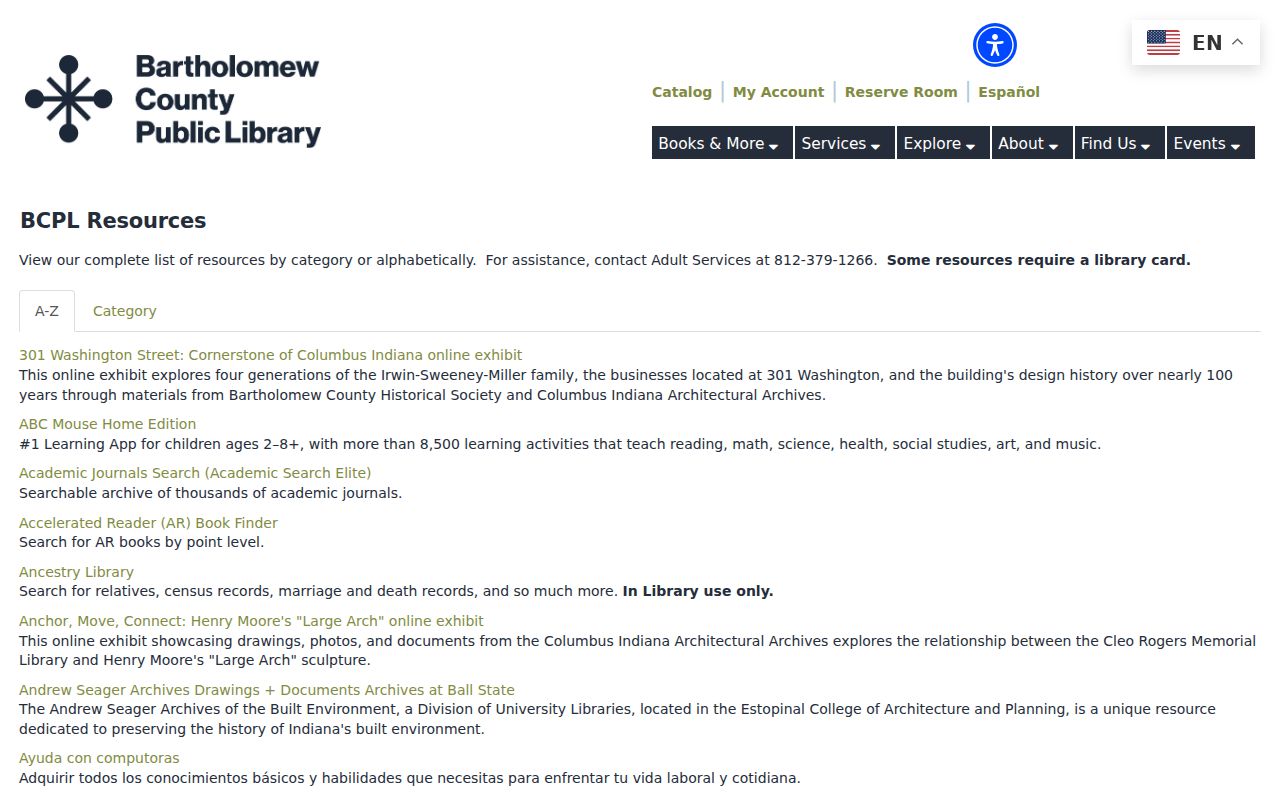
The library page shows the route into local collections; exact shelf and database availability should still be confirmed with staff.
Read a Columbus Directory Entry
A Columbus city directory entry may compress a great deal into one line. Copy it exactly before expanding any abbreviation. The local Irwin Bank transcription shows an address beside a business or named person, an occupation or business role, office or apartment wording, spouse notes, vacancy notes, and changes across editions. The printed legend controls the meaning of symbols.
| Name | Preserve surname, initials, spelling, and any spouse note |
|---|---|
| Role | Copy the printed occupation, firm, or business activity |
| Address | Record the house number, street, office, apartment, or residence wording |
| Status note | Retain vacancy, not-listed, and location marks as printed |
| Edition detail | Save publisher, year, page, repository, and image identifier |
- Criss-cross directory
- A later directory arranged by street and house number, useful for reading a block in order. No separate Columbus run was verified.
- Householder index
- An address-oriented listing that may identify a named household contact rather than every resident.
- Abbreviation key
- The volume’s own legend for shortened roles, places, and marks. Capture it before interpreting entries.
“Not listed” is not proof that a person left Columbus. The page may be missing, the household may have chosen no listing, or the publisher may have used another spelling. A directory occupant is also not automatically the deed owner.
Irwin Bank Directory Trail
BCPL’s Irwin Bank directory exhibit is a rare public Columbus sample. It follows a known building context across editions from 1898–99 through 1971, including Teetzel, Moore, Caldwell, Caron’s, and other runs. The transcription records address, business or person, role, office or apartment context, spouse notes, vacancy, and years with no listing.
This makes the building a safer teaching example than selecting a living household. Compare one edition at a time. The directory can show who or what was listed there, a Sanborn sheet can show the period building footprint and use, and a deed can establish a title instrument. Each source answers a different question.
View the digitized Columbus directory transcription before copying its year-by-year details.
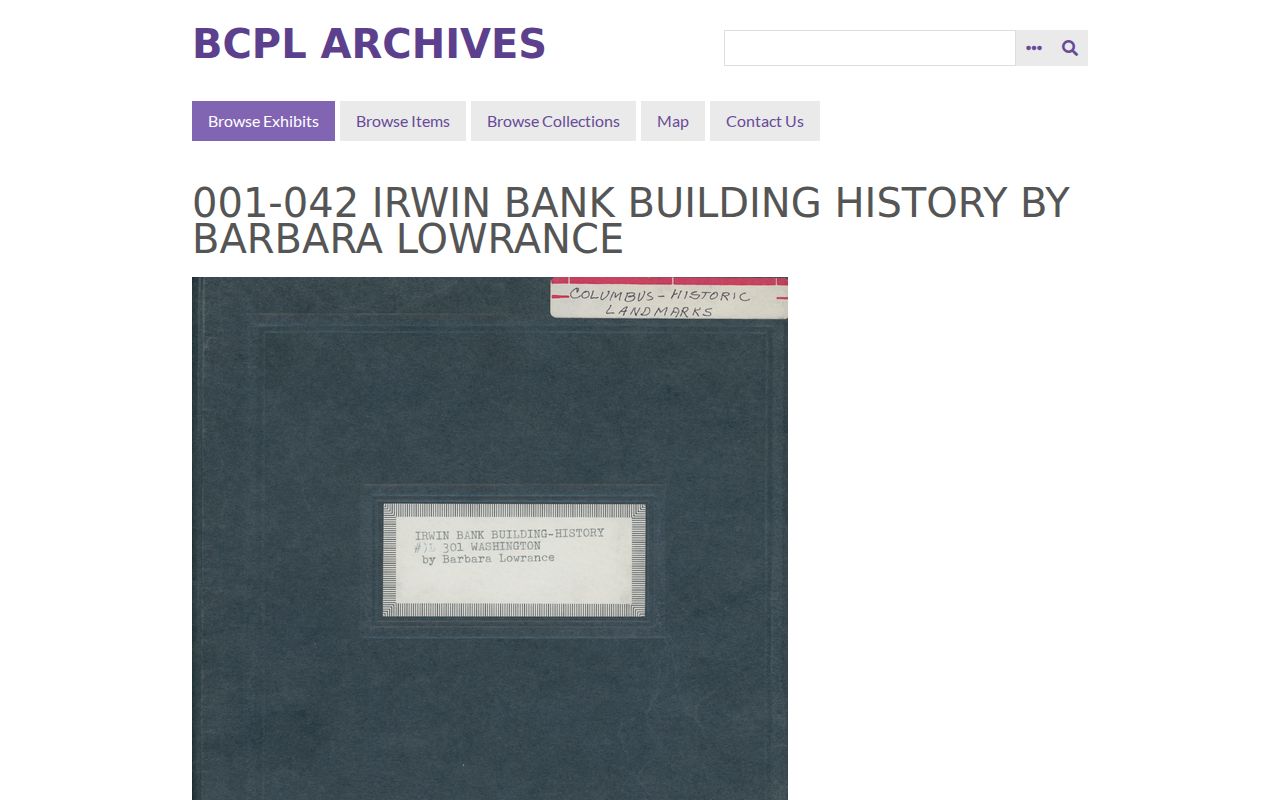
The captured exhibit demonstrates how a single address changes across publishers, roles, vacancy notes, and directory years.
Columbus Newspapers Fill Directory Gaps
BCPL links Columbus newspapers through 1963 and describes broader local newspaper access from the 1870s to the present through library databases. A recent obituary database is also linked, though its complete title list, fields, and date range were not exposed. Treat an index result as a lead, then capture the newspaper title, date, page, and image.
Yearbooks can test school-age names, while cemetery material and an obituary can explain why a listing disappears. The Historical Society’s Cline Keller Library adds family histories, church and cemetery records, Bible records, diaries, manuscripts, clippings, maps, atlases, photographs, postcards, and architecture files by appointment. It lists a $5 contribution, 25-cent copies, and a $15 minimum for outside-Columbus research plus shipping, but another page gives a conflicting copy amount. Confirm charges before ordering.
Note: A newspaper or obituary should confirm a directory clue, not silently replace the edition, page, and printed wording of the original entry.
Columbus Records Rescued Upstairs
Bartholomew County Archives says its oldest documents were rescued from the courthouse’s fourth floor. Planning for an archive began in 1980, and the first-floor courthouse archive was dedicated on November 18, 1988. Its searchable holdings run from 1821 into the early 1900s. The story explains why an early directory search may lead from a printed volume to county books and then to a copy request.
Other courthouse material moved again. The Clerk reports that older probate, civil, criminal-order, and miscellaneous books were transferred to the Indiana State Archives in August 2017. The State Archives catalog or name index may point only to a series and container, not a digital image. Ask for a citation and arrange access rather than assuming a blank website means no record survives.
Browse the BCPL Digital Archives for digitized local collections and finding aids before requesting an item.
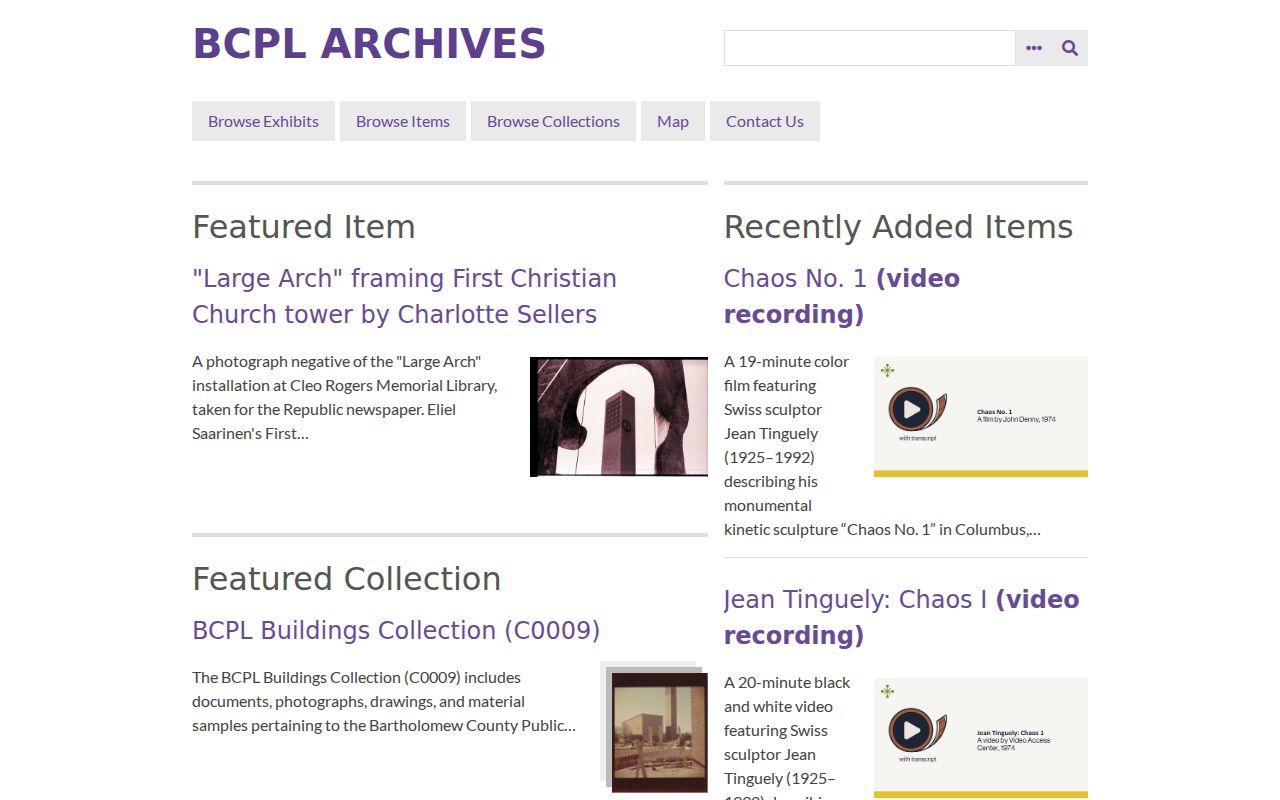
The captured archive portal can lead to local images and descriptions, but it does not represent every city directory volume held at a physical repository.
Trace Family in Columbus Directories
City directories can fill the years between federal census schedules. Begin with the nearest verified edition, then move one volume at a time. Write down address changes, spouse notes, occupation shifts, and gaps without guessing at their cause. Pair each finding with a second source such as a census, newspaper, cemetery record, probate file, or deed.
- Choose a known Columbus year and search the surname, initials, spouse, or business spelling.
- Save the edition title, publisher, page, exact entry, and repository citation.
- Move forward and backward through the nearest available editions, noting every address and role change.
- Pair directory years with census schedules and newspapers, keeping occupant and owner evidence separate.
- Close the trail with an obituary, cemetery source, probate file, or other dated record where appropriate.
A missing entry can mean a move, death, new spelling, publisher omission, vacancy, or an unlisted household. Search the old address in the next edition and the name in nearby years. For current address-keyed work, use the Columbus street directory method instead of treating a historical listing as current.
The family-history trail is strongest when every conclusion retains two dates: the date of the event or listing and the date the record was published or filed. That keeps later transcriptions from being mistaken for records created at the time.