
Columbus Previous Residents by Era
No single Columbus roll spans the whole life of a house. Current parcel data identifies the modern legal unit. Recorded deeds carry ownership back to the online boundary, while film, office books, archives, directories, census schedules, maps, and newspapers extend the search into older periods. Save the edition, record number, or retrieval date for every source.
| Columbus source | Local span | Access point | Useful evidence |
|---|---|---|---|
| Parcel roll and GIS | Current annual cycle | Elevate, Beacon, Assessor | Parcel, owner display, situs, mailing clue, assessment, and map |
| Online land index | January 1963 forward | Recorder and Doxpop | Grantor, grantee, instrument, date, and legal description |
| Deeds and plats | 1822 through 1962 | State Library film and Recorder books | Earlier title, lot, subdivision, and tract |
| Columbus directories | Verified runs, 1897 through 2013 | State Library and BCPL | Printed occupants, firms, occupations, addresses, and listing marks |
| Federal census | Through released 1950 schedules | NARA and authorized genealogy access | Households in released census years |
| Sanborn maps | 1886, 1890, and 1898 | Library of Congress | Historic block, footprint, use, and materials |
For a recent transfer, start with GIS and the Recorder. For an older Columbus address, move soon to the State Library film guide and office books. Printed listings bridge ownership to occupancy, but never prove title.
Start at the Columbus Situs
Open Bartholomew County Elevate or the county-linked Beacon map and identify the exact parcel. Capture the parcel number, physical or situs address, owner display, mailing address, legal description, subdivision and lot, map position, assessed values, and source date. A situs address is the assessed place. A mailing address is where notices go. They may differ, so tax mail cannot establish that a past resident lived there.
The Assessor points to Elevate, while general county navigation and the Recorder point to Beacon. Match the parcel ID before moving a fact between systems. Live identify, layer, and export controls were not exposed during research, so record only fields visible during the actual search.
Trace Columbus Owners Through Deeds
The Bartholomew County Recorder preserves deeds and related instruments at 440 Third Street and through Doxpop. A chain of title is the sequence of transfers for the same legal property. Work backward from the present parcel. Legal descriptions and instrument numbers are stronger links than a street number that may have changed.
- Copy the current owner display, parcel ID, and legal description from the parcel source.
- Find that owner as a grantee and confirm the purchase instrument and recording date.
- Search the seller named as grantor as an earlier grantee. Compare the legal description.
- Repeat through each transfer, keeping document and recording dates separate.
- At January 1963, move to Recorder books, State Library film, or archival holdings.
- Grantor
- The party transferring an interest.
- Grantee
- The party receiving it.
- Chain of title
- The linked series of recorded transfers.
- Legal description
- The lot, block, subdivision, tract, or metes-and-bounds text that identifies land apart from its street number.
Doxpop presents the deed-search route used with the Recorder's index.
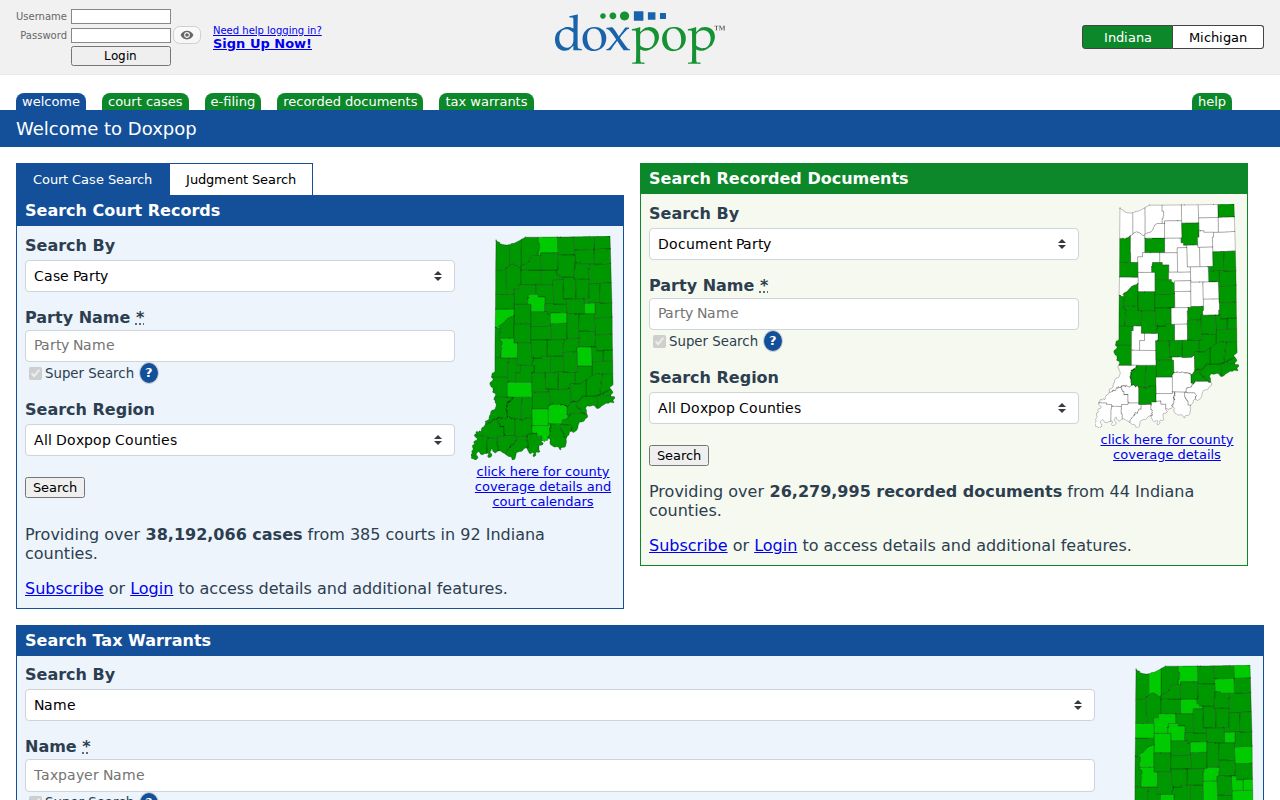
The portal begins the modern trail. Recorder books and filmed deeds carry the Columbus search past its online boundary.
Columbus Records Before 1963
January 1963 is a handoff, not the start of county land records. The Indiana State Library guide lists deeds from 1822 through 1962. County Archives reaches from 1821 into the early 1900s, and the Recorder keeps public books and computer access. Indiana State Archives can hold transferred series or provide catalog references.
Give each office the parcel, legal description, former-owner spelling, instrument type, and date range. A finding aid may name a volume or container without an online image. Save that citation, then ask how to inspect or order the page. The Recorder is at 812-379-1520, while the Assessor is at 812-379-1505.
Map Earlier Columbus House Footprints
Sanborn fire-insurance sheets survive for 1886, 1890, and 1898. They place buildings within historic blocks and show footprint, use, and construction notes. They do not prove ownership or occupancy and are not current parcel maps. Pair each sheet with a deed and the closest directory edition.
Parcel splits and combinations can make a modern lot unlike its older form. Plats and repeated legal descriptions explain those shifts. No official Columbus street-renumbering year was found. When a number vanishes, compare successive directories, the city street index, plats, maps, annexation records, and council material. Mark unresolved matches as uncertain.
Columbus Files Add House Detail
The Cleo Rogers Memorial Library Indiana Room includes architectural archives, newspapers, yearbooks, obituaries, cemetery resources, and local history. The Columbus File holds clippings and ephemera. The Historical Society's Cline Keller Library adds photos, atlases, maps, manuscripts, diaries, church records, and architecture material by appointment.
Give staff the full address, approximate date, parcel or legal description, likely spelling, and source already checked. Ask for an edition, page, collection, box, or image identifier. This keeps a vivid clue tied to a source another researcher can find.
BCPL displays the Columbus File collection online.
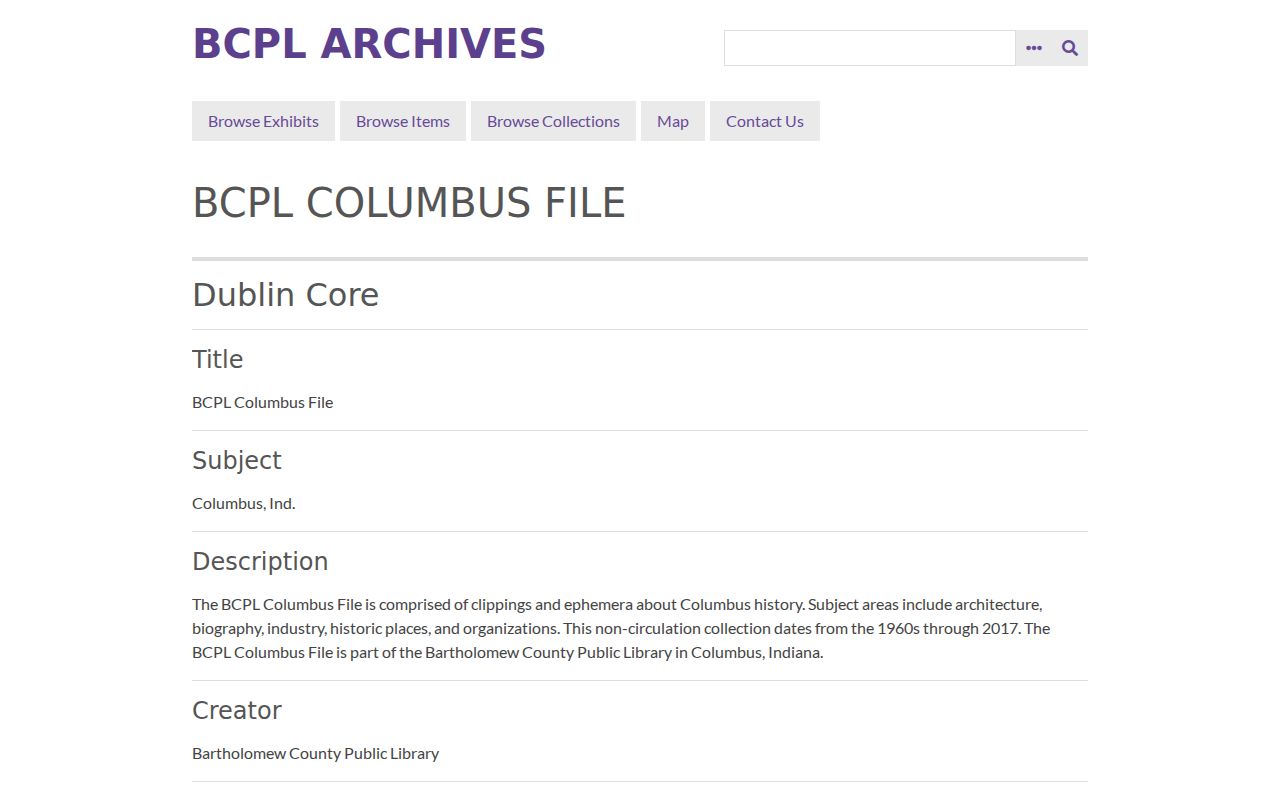
The collection can add context around previous residents, firms, buildings, and events when the legal record gives only a transfer.
Rescued Columbus Records Survive
Bartholomew County Archives says its oldest documents were rescued from the courthouse's fourth floor. Archive planning began in 1980, and the facility was dedicated on November 18, 1988. An online dead end may therefore lead to a saved paper volume rather than a lost record.
The archive covers selected material from 1821 into the early 1900s. Older probate, civil, criminal-order, and miscellaneous Clerk books moved to Indiana State Archives in August 2017. Search the Research Indiana Catalog, preserve the series and container, and arrange access instead of assuming a catalog hit includes an image.
Confirm Columbus Previous Residents
Deeds name title parties, not every person who lived there. Columbus directories add occupants, firms, occupations, spouse notes, address lines, office or apartment marks, and occasional vacancy notes. Verified runs begin in 1897–99 and extend through Caron's, Haines, and Polk editions. BCPL also offers a transcription that follows an address through sample runs from 1898 to 1971. The Columbus city directory page explains the collections.
Pair each entry with the nearest released census. The 1950 census is the latest public federal schedule under the 72-year release rule. A directory omission does not prove departure, and a census household does not prove title.
- Copy the full directory line, publisher, year, page, and street spelling.
- Compare names with the released census schedule for that decade.
- Record business, spouse, vacancy, or occupation notes in the source's own terms.
- Use BCPL newspapers, cemetery records, an obituary, or probate file to close an appropriate life-event trail.
Obituaries and probate can identify heirs or later addresses, but they may contain sensitive facts. Verify the newspaper citation or court file before treating a database lead as fact.
Keep a small source log for each Columbus address. List the year searched, the exact address form, the resident or owner role, and the repository call number or instrument number. Note every year with no entry as well. That record makes it easier to spot a move, vacancy, street-name change, or gap in the available directory run without turning silence into an unsupported claim.
Lawful use. Research previous residents for house history, family history, or personal curiosity. Never use a Columbus address trail to watch, harass, intimidate, or harm a living person.